Ending Tool Fragmentation for AI-Native Engineering Teams
Developers routinely jump from Claude Code or Codex CLI in the terminal to Cursor or Trae in the editor. Yet conventional agents lock architectural trade-offs inside private tool silos—and simple SQLite FTS5 MCP scripts struggle with bi-temporal spec changes, code identifier matching, and enterprise team permissions.
6 Native Host Integrations & 7 Standard MCP Tools
MemoryBox 2.0 registers clean MCP configs and lifecycle hooks (SessionStart, UserPromptSubmit, SessionStop) across Claude Code, Codex CLI, Cursor (.mdc templates), Trae, OpenCode, and OpenClaw via seven compact tools: memory_ingest, memory_recall, memory_record_skill, memory_attach_blob, memory_pull_dream_batch, memory_commit_dream, and memory_scope_whoami. In Path 6 live verification, Codex (74 µs) and Trae (30 µs) queried the exact same vault seamlessly.
Portable Hardware Vaults & Instant Visual Explainability
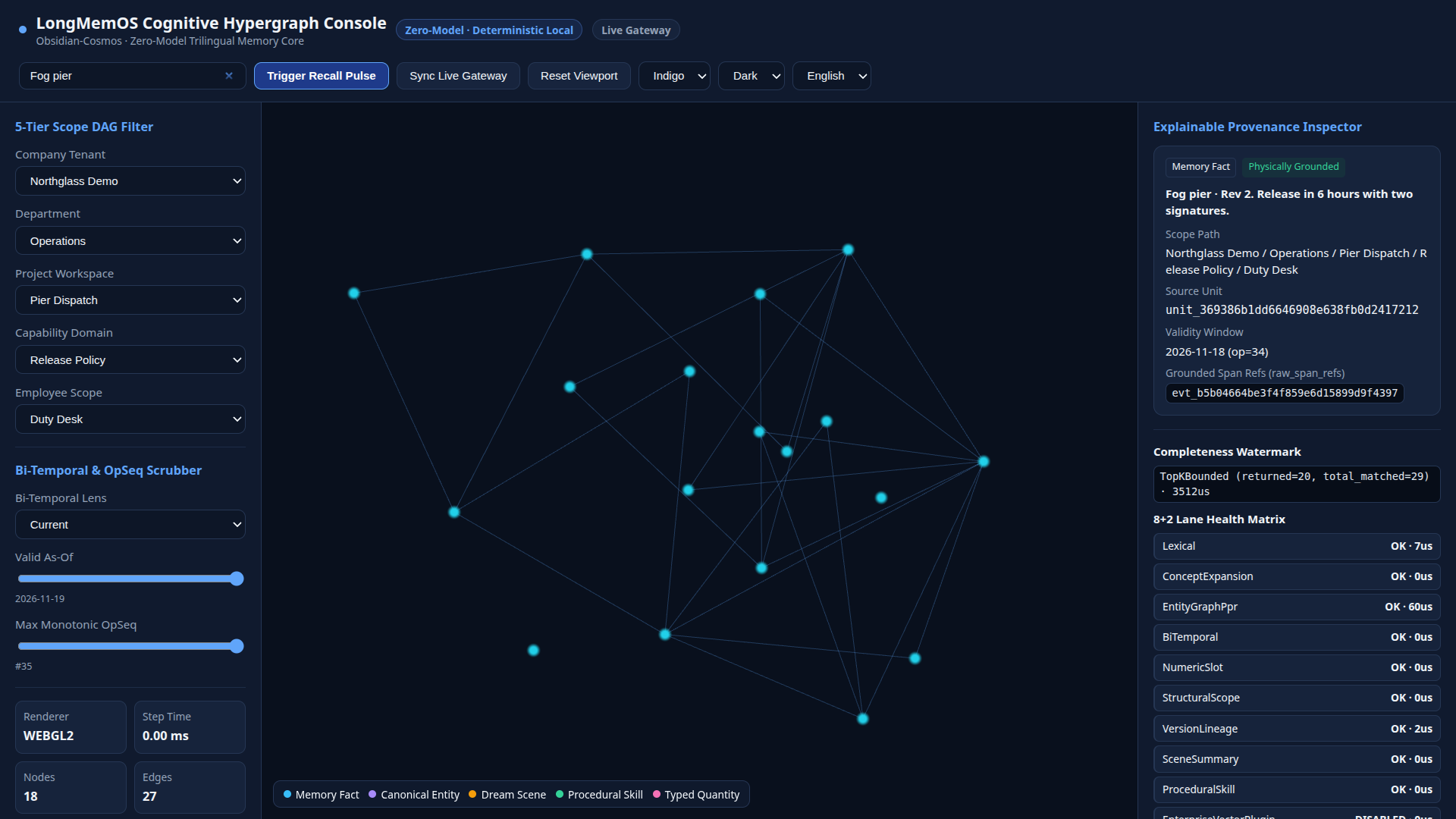
Pair a 256GB NVMe portable drive (4.70 GB footprint for 1M turns over 10 years, guarded by 4-layer anti-format protection) with Obsidian-Cosmos—a zero-CDN 57.7 KB WebGL2 workbench tracing every hit back to raw spans and encrypted attachments.